
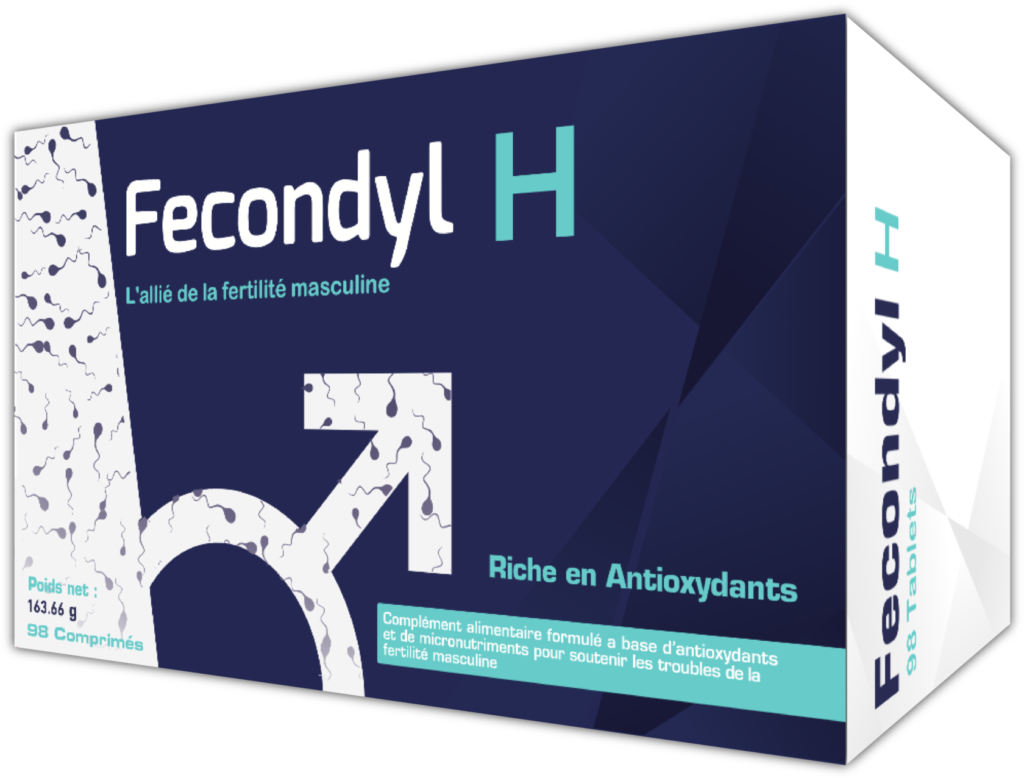


Fecondyl H is a food supplement formulated with amino acids, antioxidants, vitamins, and trace elements, including zinc and selenium.
It provides key nutrients involved in male reproductive health.
✅ Zinc contributes to normal fertility and reproduction, as well as to normal DNA synthesis.
✅ Selenium contributes to normal spermatogenesis.
✅ Vitamin E, zinc, and selenium contribute to the protection of cells from oxidative stress.
Composition
| Composition | Quantity per day/3 tablets |
|---|---|
| L-carnitine | 300 mg |
| L-arginine | 375 mg |
| Coenzyme Q 10 | 22,5 mg |
| Glutathion | 150 mg |
| Lycopene | 7,5 mg |
| Vitamine E | 150 mg |
| Folic acid | 330 µg |
| Zinc | 15 mg |
| Selenium | 50 µg |
How to use ?
Take 3 tablets per day for at least 3 months, preferably after meals.
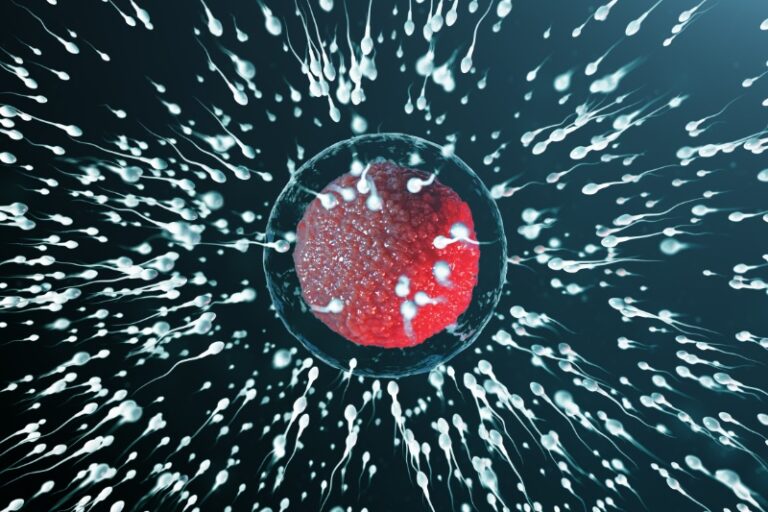
Sperm production is a continuous process that takes place in cycles. On average, it takes about 72 days for sperm cells to fully mature, followed by several days during which they travel through the reproductive tract to reach their final functional state. During this time, the body requires various nutrients that play a role in cellular protection and reproductive function.
Fecondyl H provides key micronutrients, including zinc, which contributes to normal fertility and reproduction, and selenium, which supports normal spermatogenesis. In addition, vitamin E, zinc, and selenium help protect cells from oxidative stress.
Nutrition and health claims
Oxidative stress can negatively affect sperm function.
Fecondyl H provides key nutrients such as zinc and selenium that contribute to normal fertility and reproduction, and to the protection of cells from oxidative stress.
Zinc
Contributes to:
- Normal fertility and reproduction
- Normal DNA synthesis and plays a role in the process of cell division and in protecting cells against oxidative stress
- Fertility and normal DNA reproduction, maintaining normal testosterone levels in the blood
- Zinc and vitamin E help protect cells against oxidative stress
Vitamin E
Contributes to the protection of cellular constituents against oxidative damage
Selenium
Selenium is an essential trace element involved in various biological processes. It plays a role in sperm formation, and contributes to normal spermatogenesis.
In human studies, low selenium status has been associated with alterations in male reproductive parameters, highlighting the importance of adequate dietary intake.
- Selenium contributes to normal spermatogenesis
- Selenium contributes to the protection of cellular constituents against oxidative damage
- selenium contributes to the normal functioning of the immune system